
Guide — Orange County & Los Angeles County
Chain vs Belt vs Screw Garage Door Openers (2026)
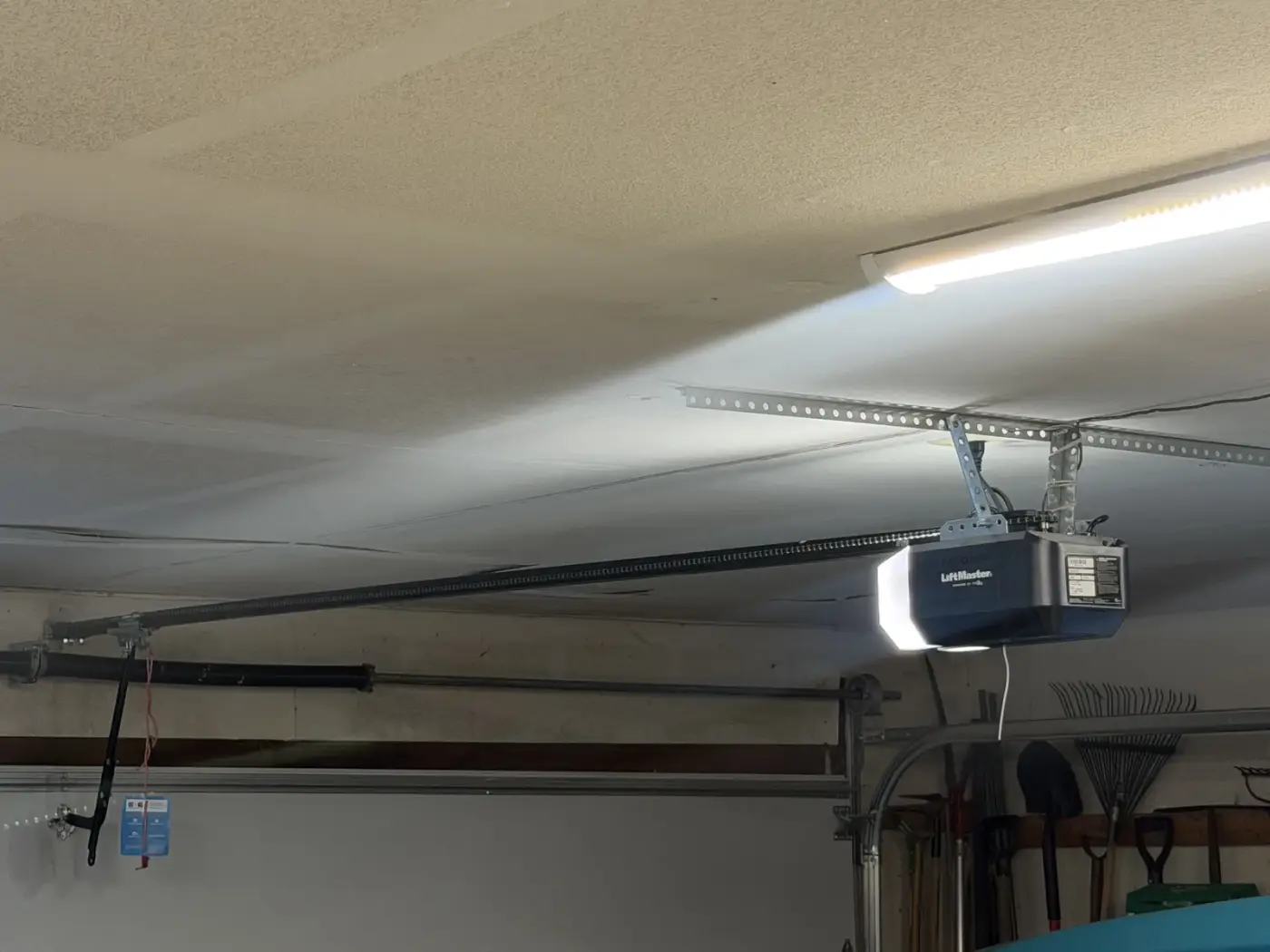
Chain drives pull the door with a metal chain — strong and budget-friendly but the loudest of the three. Belt drives use a reinforced rubber belt for quiet running, the usual pick for bedrooms above the garage. Screw drives thread a lifting trolley along a threaded steel rod.
This guide compares the three drives on noise, lifespan and typical price, then covers the wall-mount option most people forget.
The Three Drives, Compared
The drive is the mechanism that moves the trolley — and the trolley moves the door. It decides how the opener sounds, how long it lasts, and roughly where it sits on typical US market ranges.
| Chain drive | Belt drive | Screw drive | |
|---|---|---|---|
| How it moves the door | Steel chain on a rail | Reinforced rubber belt on a rail | Trolley threads along a steel rod |
| Noise | Loudest — a rhythmic clatter | Quietest of the three | Moderate — a slow shudder |
| Strength | Highest; handles heavy doors easily | Strong enough for nearly all homes | Strong, with fewer moving parts |
| Lifespan | Long; chains tighten and lubricate easily | Long; belts don’t rust or clatter | Long; the rod needs periodic lube |
| Typical market price | Lowest of the three | Usually a step above chain | Mid-range |
Noise, Lifespan and Price in Plain Terms
Noise is the first thing a household notices. Belt drives are the quiet pick — the standard recommendation whenever a bedroom, office or nursery shares a wall with the garage. Chains clatter with every cycle; it’s not a fault, just the design. Screws sit between the two, with a low shudder most people stop noticing.
Lifespan tracks maintenance more than drive type. A chain that’s tightened and lubricated lasts decades; a belt barely wears at all; a screw’s rail wants lubrication once or twice a year. Skip the upkeep and any of the three ages fast.
Price follows the same order everywhere: chain lowest, belt a step above, screw in between — on typical US market ranges, and the gap narrows once installation is included. The honest way to compare is the installed total, not the box price.
What About Jackshaft (Wall-Mount) Openers?
A fourth option mounts on the wall beside the door instead of overhead: the jackshaft. It frees the ceiling for storage or a lift, runs quiet, and pairs well with high-lift doors — at a typically higher price point than rail drives.
It has one requirement worth knowing early: a jackshaft works with torsion spring doors, not extension. On the right door it’s the cleanest install in the trade; on the wrong door it’s not an option at all. It also wants a nearby outlet and a properly balanced door, since the motor turns the torsion bar directly instead of pulling a trolley.
Matching the Drive to Your Door
Five questions settle most opener choices before a spec sheet ever comes out:
- Door weight. Heavy solid-wood doors argue for chain or a heavy-duty belt rated for the load.
- Bedroom wall? Belt, unless noise genuinely doesn’t matter to the household.
- Ceiling storage or a car lift? Jackshaft if the springs allow; otherwise a low-profile rail.
- Smart features? All three drive types come in smart models — the drive and the electronics are separate decisions.
- Existing springs. Extension-spring doors rule out jackshaft retrofits; everything else stays open.
If two drives both fit, pick on noise first and price second — you hear the opener every day and pay for it once.
When to Call Instead
Choosing a drive is easier with the door in front of you — weight, headroom and spring type decide what fits. Book garage door opener installation for a matched install, garage door opener repair when an existing unit misbehaves, and read the smart opener guide if app control is on your list.
Opener Drive FAQs
Is a belt drive strong enough for a heavy wooden door?
Yes for most residential doors. For unusually heavy solid-wood or custom doors, chain or a heavy-duty belt rated for the weight is the safer match — decided on-site.
Which drive is quietest?
Belt. It’s the standard recommendation whenever a bedroom, office or nursery shares a wall with the garage.
Do screw drives still make sense?
They do — fewer moving parts, solid lifting, and no belt or chain to replace. The trade-off is periodic rail lubrication and slightly more noise than belt.
Can my old opener’s rail be reused with a new motor head?
Usually not. Rails and motor heads are matched pairs; mixing them voids safety certifications. Full-unit replacement is the standard approach.