
Guide — Orange County & Los Angeles County
Noisy Garage Door: What Each Sound Means
A noisy garage door is telling you which part is wearing. Grinding points to rollers, a bang points to a spring, squeaking asks for lubrication, rattling means loose hardware. Learn the sounds, do the safe upkeep — and treat a bang as a same-day call, not a to-do.
This guide maps each sound to its likely cause, lists the upkeep that’s safe to do yourself, and names the sound that shouldn’t wait.
Sound to Cause: The Quick Map
Garage doors make honest sounds — each one traces back to a specific part. Match what you hear to the map below before touching anything:
| Sound | Likely cause | Typical fix |
|---|---|---|
| Grinding / rumbling | Worn or flat-spotted rollers, dirty tracks | Roller replacement, track cleaning |
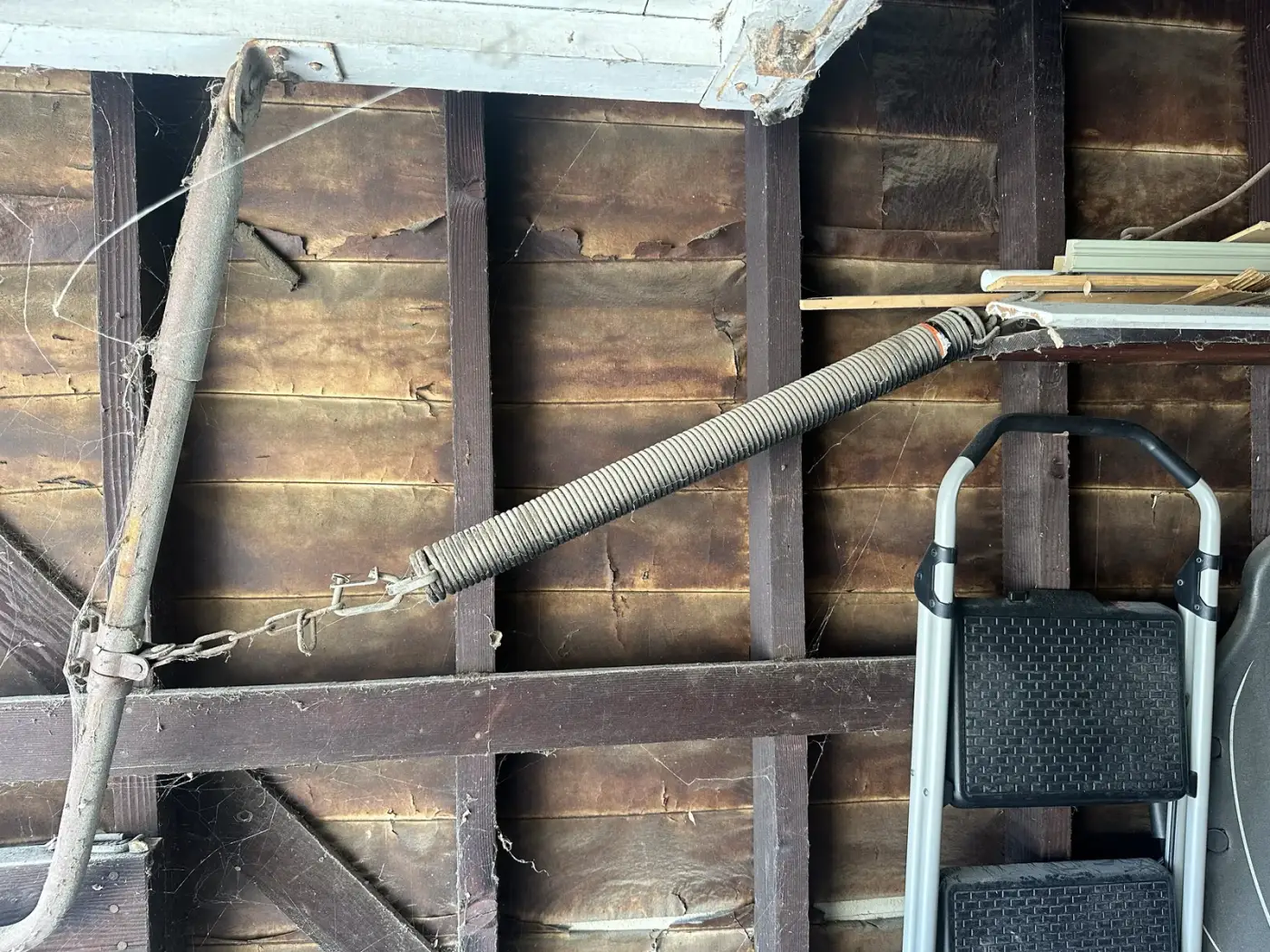
| Loud bang from the garage | Torsion or extension spring letting go | Same-day spring replacement — the door is unusable until fixed |
| Squeaking / screeching | Dry rollers, hinges or bearings | Lubrication — a ten-minute tune-up task |
| Popping / cracking | Worn torsion bearings or dry coils | Bearing and lubrication service |
| Rattling | Loose chain on a chain-drive opener, loose hinge or bracket hardware | Opener chain adjustment, hardware tightening |
| Slapping | Fraying lift cable or a belt with a hard spot | Cable inspection — do not run the door |
| Motor hums without movement | Opener engaged with a failed spring | Stop using the opener; call |
Two questions sharpen the diagnosis: where the sound comes from — rollers at the sides, springs overhead, opener at the ceiling — and when it happens: at the start, mid-travel, or as the door lands.
Prevention That’s Safe to DIY
Most door noise is friction, and friction is the one thing a homeowner can safely reduce. This routine takes about fifteen minutes:
- Lubricate twice a year. Silicone-based garage door lubricant on roller stems, hinge pivots and bearings — not WD-40, which strips the grease you want to keep.
- Tighten visible hardware. Track and hinge bolts work loose with vibration; snug them, don’t crank them.
- Wipe the tracks. Dust and coastal salt film on the rails amplify every other sound.
- Test by hand. With the opener disengaged, a balanced door should hold at waist height and move smoothly. Heavy or falling means the springs, not the noise, are the story.
- Listen for changes. Noise that appears suddenly outranks noise that crept up over months.
What Not to Do About Noise
A few popular fixes make things worse:
- Don’t grease the tracks. Rollers are meant to roll, not slide; grease collects grit and wears them flat.
- Don’t adjust spring hardware. Set screws and winding cones hold stored energy — a quarter-turn the wrong way releases it.
- Don’t turn up the opener force to push through a noisy spot. It hides the cause and strains the motor.
- Don’t wait on a sound that changes. A squeak that becomes a grind is a part moving from dry to damaged.
The Sound That Shouldn’t Wait
A bang followed by a door that won’t lift — or lifts crooked — is a snapped spring, and the door has lost its assist. Don’t cycle the opener against it; every attempt strains the motor and the cables, and the door itself can drop.
One bang and one call is the right sequence. It’s a same-visit fix on a stocked truck, and it’s the one item on this page that shouldn’t wait for a convenient afternoon.
When to Call Instead
Yearly tune-ups catch most of these sounds before they start — see what a garage door maintenance visit covers and put it on the calendar. Grinding doors usually mean roller and track work; book garage door roller & track repair when the rumble arrives.
Noise FAQs
My door is suddenly much louder in cold weather — normal?
Partly. Cold stiffens lubricant and shrinks metal clearances, so a door that’s borderline dry squeals in winter. If the noise vanishes in warm months, schedule lubrication before next winter.
Can I just lubricate the springs to stop the noise?
Spring coils can take a light coat of garage-door lubricant, but grinding or popping from the spring area means worn bearings or worse — lubricant won’t mask a failing spring safely.
How often should a garage door be lubricated?
Twice a year is the standard rhythm. Coastal homes benefit from rinsing salt film off the hardware first, then lubricating.
Why does my chain-drive opener rattle now when it didn’t before?
Chain slack grows with use. Most chain drives have an adjustment bolt on the rail — turn it a quarter-turn at a time. If tightening doesn’t quiet it, have the drive inspected.