
Guide — Orange County & Los Angeles County
Sliding vs Swinging Gates: Which Fits Your Property
Sliding gates win on tight driveways and sloped lots because they travel sideways along the fence line. Swinging gates cost less up front and suit flat, open entries — but they need clear swing space. Space, slope, budget and upkeep decide the right answer for your property.
Most driveway-gate regret comes from picking the design the driveway couldn't support.
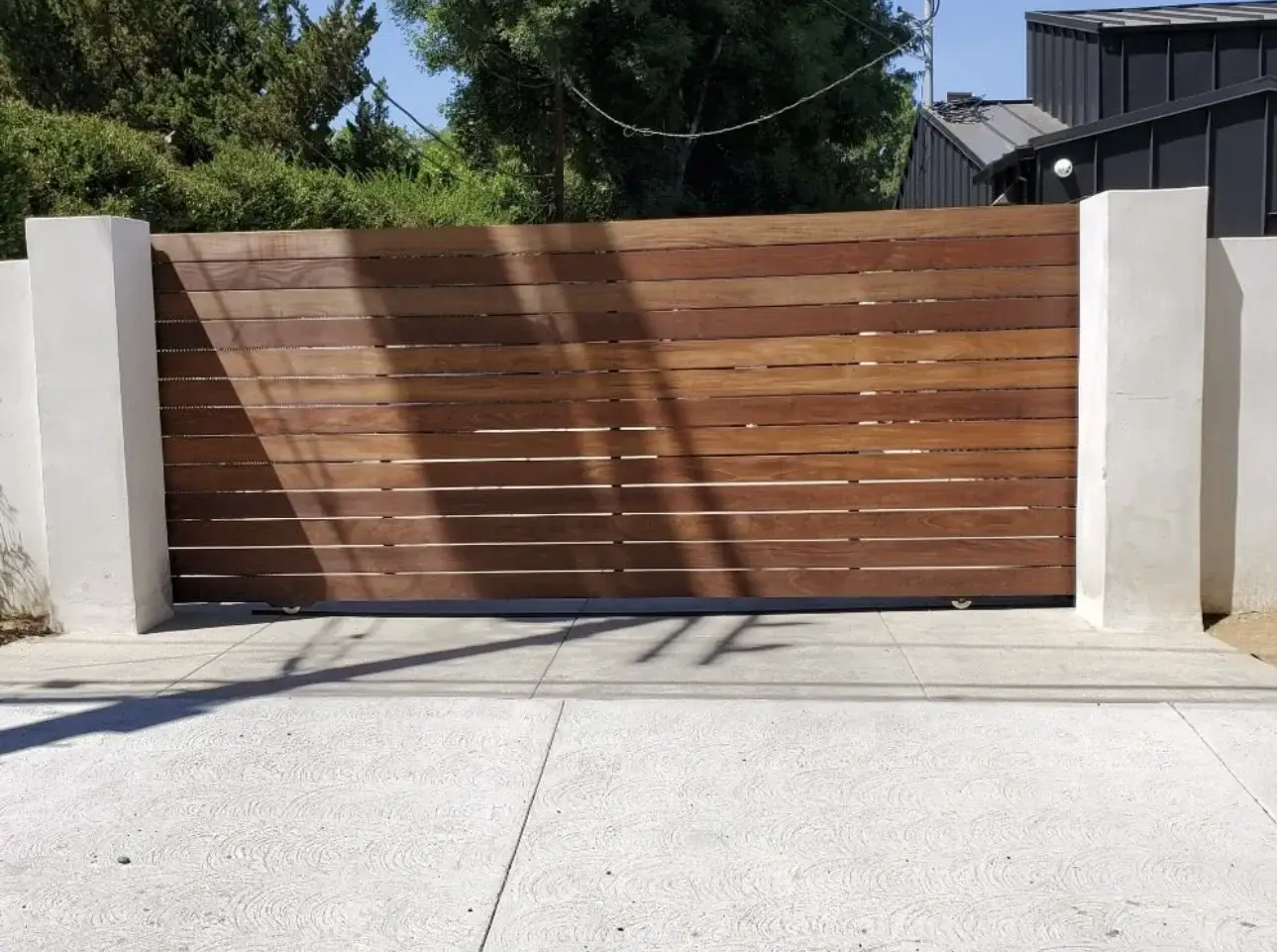
Side-by-Side Comparison
Both designs automate well and both last decades when maintained. They differ in what they ask of your site and your wallet:
| Factor | Sliding gate | Swinging gate |
|---|---|---|
| Space needed | Runs along the fence line — needs a clear run roughly the gate's width beside the opening | Needs a clear swing arc inside or outside the driveway |
| Sloped driveways | Handles grade changes well; cantilever designs excel on slopes | Struggles — rising ground clips the leaves |
| Hardware & cost | Track or cantilever systems and slide operators cost more | Posts, hinges and swing operators are the simpler, cheaper setup |
| Upkeep focus | Wheels, bearings, track and end stops | Hinges, posts and leaf alignment |
| Wind exposure | Solid panels catch wind like a sail — louvers or perforation help | Solid leaves catch wind too; panel design matters on exposed lots |
| Automation | Slide operator with rack-and-pinion drive | Swing arms, linear actuators or underground motors |
Whichever way you lean, decide the automation plan at the same time — retrofitting an operator onto a gate designed for hand-swinging is a common source of sag and drag later.
When a Sliding Gate Wins?
Choose slide when the site pushes you there — it usually does for at least one of these reasons:
- Short driveway where a swing arc would block the sidewalk, street or garage path.
- Rising or falling grade across the opening that would clip swing leaves.
- A fence line with room to spare — the gate parks along it when open.
- Full-width opening desired: one panel spans the whole driveway without double-leaf alignment.
- Busier vehicle flow, where a single sliding motion clears the way faster.
When a Swinging Gate Wins?
Swing earns its place on simpler sites and simpler budgets:
- Flat, deep setback with plenty of clear interior space for the arc.
- Budget-first projects — fewer moving parts, simpler operators.
- Traditional frontage where double gates match the house's character.
- Minimal side yard — swing needs no parking lane along the fence.
- Estate or equestrian entries where wide, stately double leaves are the look.
When to Call Instead
Site conditions decide this choice more than catalogs do. We measure, quote and install both types:
- New gates, automation-ready footings and operator planning — see our gate installation service.
- Existing slide gates that drag, jump or grind — sliding gate repair covers wheels, tracks and end stops.
- Undecided between the two at your driveway — call us for an on-site look and a written quote for each option.
Sliding vs Swinging Gate FAQs
Can a swing gate work on a sloped driveway?
Usually not well — rising ground clips the leaves mid-swing. Workarounds like grade changes or mounting higher create other problems; most slope cases end up happier as sliding or cantilever gates.
How much side room does a sliding gate need?
Roughly the gate's own width plus a small margin, along the fence line beside the opening. Cantilever systems need a similar run plus counterbalance space at the opening.
Which type lasts longer?
Both last decades with maintenance; the wear points just differ. Sliding gates wear wheels, bearings and tracks; swinging gates wear hinges and posts. Upkeep, not design, decides the lifespan.
Do all sliding gates need a track in the ground?
No — traditional slide gates roll on a ground track, while cantilever gates hang from posts with no ground track at all. Cantilever suits driveways where a track would collect debris or fight the grade.