Guide — Orange County & Los Angeles County
Garage Door Maintenance Checklist (2026)
A solid garage door maintenance routine is four checks, twice a year: a visual pass over springs, cables and rollers; lubrication at the moving points; a balance test by hand; and a sensor reversal test. It’s about thirty minutes, and it catches most failures early.
This guide lays out the seasonal checklist, names the exact lube points, and adds the coastal extras Orange County homes need.
The Seasonal Checklist
Run this table every six months — spring and fall are the usual pairings. Each row takes minutes, and together they catch the failures that surprise everyone else in July and January:
| Check | What to do | Pass looks like |
|---|---|---|
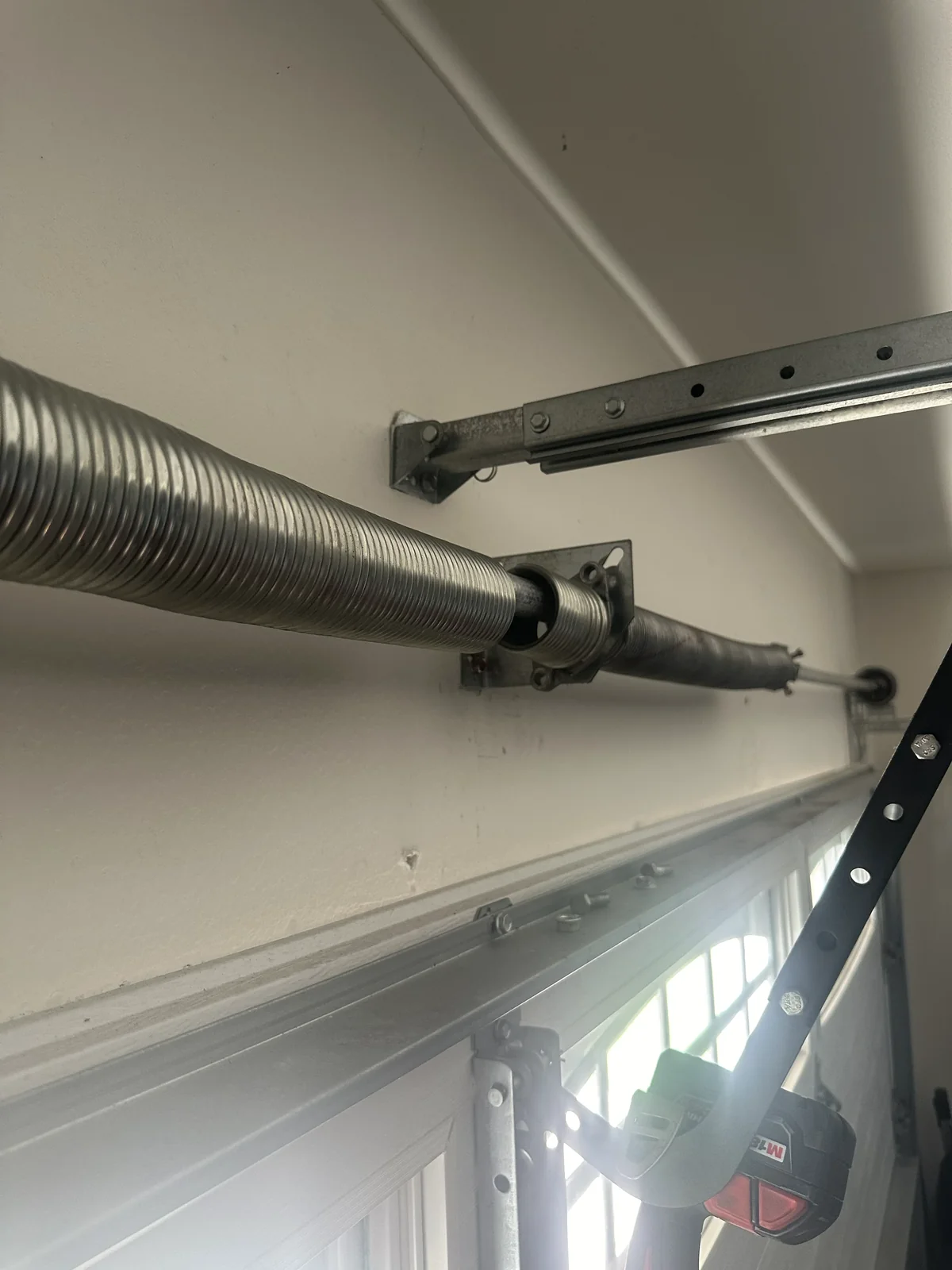
| Visual pass | Eyes on springs (no gaps in coils), cables (no frays or kinks), rollers (no cracking or flat spots), tracks (no dents) | Hardware intact, nothing flagged |
| Lubrication | Garage-door lubricant on roller stems, hinge pivots, bearings and the opener rail | Quieter travel within a cycle or two |
| Balance test | Opener disengaged, door to waist height, let go | Door holds; sinking or shooting up means spring trouble |
| Sensor reversal test | Wave an object through the beam during a close | Door reverses immediately |
| Force test (auto-reverse) | Let the door close on a wood block set on the floor | Reverses and reopens without straining |
| Hardware check | Snug track bolts and hinge screws | No rattles on the next cycle |
Where to Lubricate — and Where Not To?
Roller stems and bearing points, hinge pivots, the torsion bar bearings at each end, and the opener rail take a silicone-based garage door lubricant. Skip WD-40 — it’s a solvent, and it strips the grease you’re trying to keep.
Don’t flood the tracks. Tracks need cleaning, not grease — an oily rail attracts the grit that grinds rollers flat. A rag over the track after lubricating nearby parts is the finish line, not a second coat. A light pass is enough everywhere else — if lubricant is dripping, it’s too much.
The Balance Test, Done Right
Disconnect the opener (pull the release cord with the door closed), lift the door by hand to waist height, and let go. A balanced door holds. One that sinks or shoots upward is telling you the springs aren’t carrying their share — and that’s an inspection, not a lubrication job. Afterward, reconnect the opener by running it until the trolley re-engages with a click.
One boundary worth stating plainly: look, don’t touch, on the springs themselves. Visual gaps, rust and the balance result are fair game; adjusting or winding spring hardware under tension is pro work, full stop.
How Often: A Simple Calendar?
Maintenance works when it’s on a calendar instead of in a good intention:
| When | What |
|---|---|
| Every six months | The full checklist above — visual pass, lubrication, balance, sensors, force and hardware |
| Every few months (coastal homes) | Rinse exterior hardware to clear salt film; look for rust bloom |
| Once a year | Professional tune-up — spring condition, cable wear and opener settings |
| After a wind event or an impact | Track line, panel surfaces and sensor alignment before the next cycle |
The Coastal Note
Homes from Newport Beach down through the beach cities should add a rinse-down step: a low-pressure hose over the door’s exterior hardware a few times a year clears the salt film that speeds corrosion. Watch for white powder or rust bloom on hinges, tracks and spring hardware — coastal doors age faster and earn a yearly professional look. The coastal garage door maintenance guide has the full salt-air routine.
When to Call Instead
Anything the checklist flags — a fraying cable, a failing balance test, cracked rollers — goes to a technician, not a weekend project. Book a garage door maintenance tune-up for the annual once-over, and coastal homeowners should read the full coastal maintenance routine for the salt-air schedule.
Maintenance FAQs
How often should garage door maintenance be done?
Twice a year for the checklist above is the standard rhythm. Coastal homes add the rinse-down step more often, and a professional tune-up yearly catches what eyes miss.
Can I maintain the springs myself?
Look, don’t touch. Visual gaps and rust you can spot; adjusting or lubricating hardware under tension is pro work — springs store enough energy to cause serious injury.
What’s the fastest sign maintenance is overdue?
Noise. A door that’s newly loud is a door asking for lubrication or rollers — the same visit usually covers both.
Does an unmaintained door really cost more over time?
Yes, in the same way tires do: dry rollers chew tracks, unbalanced doors strain openers, and small frictions compound into the expensive failures — springs, cables, motor boards.