
Guide — Orange County & Los Angeles County
Gate Maintenance Checklist: Monthly, Quarterly, Yearly
A gate that gets ten minutes of care each month rarely calls for emergency repair. This checklist splits gate maintenance into monthly lubrication and cleaning, quarterly hardware and operator tests, and an annual professional inspection that includes safety-device testing. Monthly, seasonal and yearly tasks are listed in the order a tech walks the gate.
Coastal salt and inland dust both punish gates — the schedule matters more here than in most places.
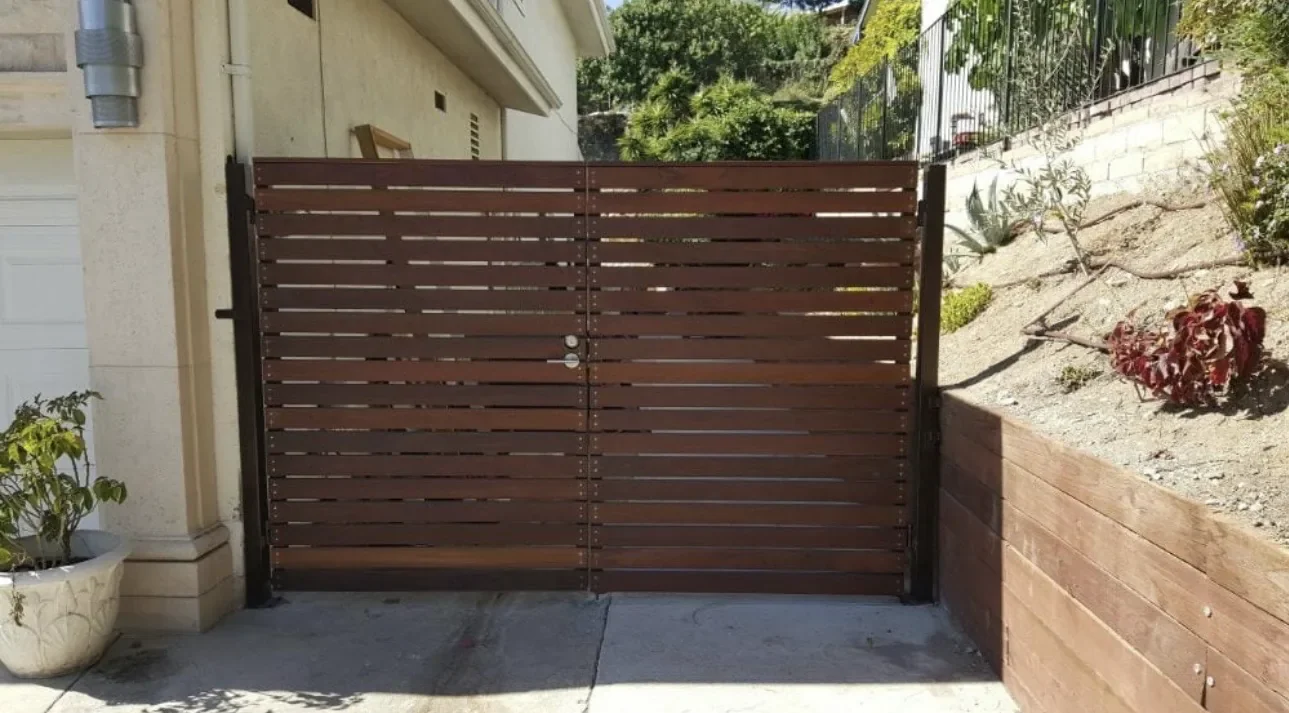
The Maintenance Schedule
Gate upkeep collapses into three frequencies. The monthly items are the ones that prevent the expensive calls; the annual one is where small finds get fixed cheap:
| Frequency | What to do |
|---|---|
| Monthly | Lubricate hinges or slide-gate wheels; rinse coastal hardware with fresh water; clear the track of leaves, grit and debris; run a full open-close cycle and listen |
| Quarterly | Tighten visible fasteners and hinge bolts; check chain or belt tension per the operator manual; test photo eyes and the safety edge; inspect battery backup if fitted |
| Annually | Professional inspection: operator internals, V-groove wheels and cantilever rollers, post anchors, full entrapment-safety test, settings verified to spec |
Coastal homes should treat the monthly rinse as non-negotiable — salt film is what shortens wheel and bearing life. The garage-door companion routine lives in our garage door maintenance checklist.
Lubrication Points and Hardware Care
Lubrication is where most do-it-yourself gate care goes wrong — either skipped entirely or drowned in the wrong product:
- Swing gates: hinge pins and bearing points, lightly — not soaked. Wipe away excess so it does not collect grit.
- Sliding gates: V-groove wheels and their bearings, plus a light film on the track — never a puddle that traps sand.
- Cantilever gates: the carriage rollers and track channels, which carry the whole gate when they are healthy.
- Operators: chain or screw-drive lubrication only as the operator's manual specifies; wrong products gum up the works.
- Keep lube off sensors and edges: silicone overspray on photo eyes or sensing edges causes phantom faults.
- Use gate-rated products: silicone or lithium products made for gates and doors; avoid multi-purpose sprays as your only lubricant.
Operator and Safety Tests Anyone Can Run
Three quick tests, once a quarter, catch the faults that matter most:
- Full-cycle test: run open and close from the keypad or remote and listen. Grinding, stuttering or mid-travel stalling are early warnings.
- Photo-eye test: wave a broom handle through the beam as the gate closes. It should stop or reverse immediately and consistently.
- Edge / obstruction test: per your operator's manual, verify the sensing edge reverses the gate on light contact. If it does not, stop normal use and book a repair.
- Battery backup test: if fitted, pull main power briefly and confirm the operator still runs — before an outage tells you instead.
When to Call Instead
Lubricating and testing are homeowner work. Grinding wheels, dragging gates, failed safety tests and operator faults are ours:
- The full repair, automation and access-control range — start at our gate services hub.
- Slide gates that drag, jump or grind — see sliding gate repair for wheels, tracks and end stops.
- Anything failing a safety test, any hour — call us. A gate that will not reverse is an urgent repair, not a someday item.
Gate Maintenance FAQs
How often should a gate be serviced professionally?
Annually for most properties, and twice a year near the coast or on high-cycle commercial gates. The yearly visit is where worn wheels, loose anchors and drifting safety settings get caught early.
What lubricant should I use on my gate?
Silicone or lithium products rated for gates and door hardware, applied lightly at hinges, wheels and bearings. Follow the operator manual for chain or screw drives, and keep all lubricants off sensors and sensing edges.
My gate is grinding — fix it myself or call?
Grinding usually means worn wheels, bearings or a damaged track, and forcing it wears the operator along with them. Clean and lubricate first; if the grinding persists, book a repair before the operator pays for it too.
Does maintenance really prevent breakdowns?
Most emergency gate calls trace back to deferred care — dry wheels, slack chains, debris in a track. Ten minutes a month does not make a gate immortal, but it reliably moves failures from 'tonight' to 'during a scheduled visit.'